
Outdoor heating guide
Pyramid or mushroom? Pick the right heater before you pick the venue
Desert nights in the UAE swing from balmy to chilly the moment the sun drops, and by January a Dubai rooftop after 9pm can sit under 15°C. If you are planning a wedding in Al Barsha, a corporate dinner at DIFC or a beach majlis in Ras Al Khaimah, the heater style you choose changes how the space feels, how much gas you burn and how the photos turn out. Pyramid and mushroom heaters do the same job in very different ways, and knowing which one fits your event is the difference between guests staying past midnight and guests quietly reaching for their coats.
The two designs
How each heater is built, and why that matters
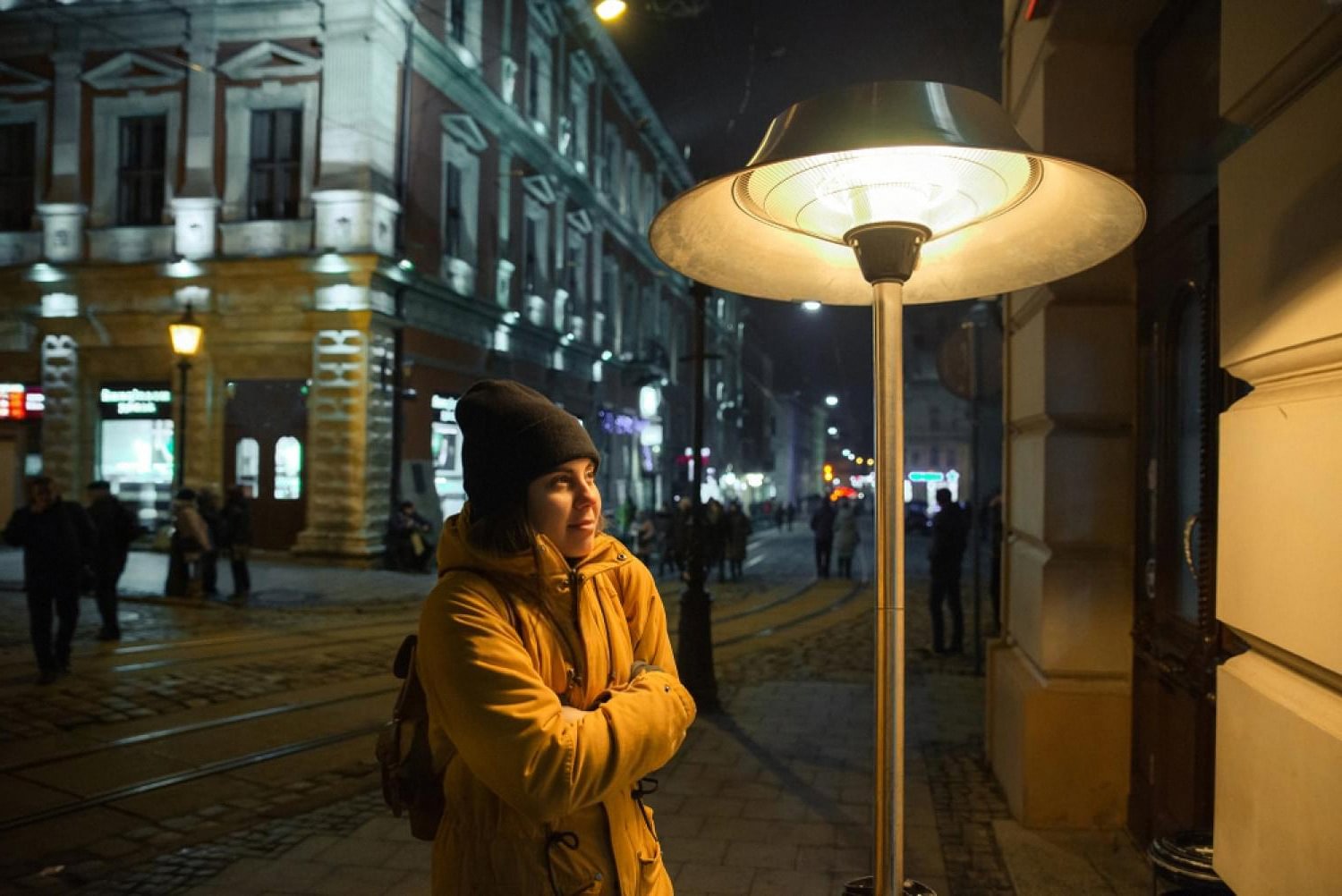
A mushroom heater is the classic patio design: a tall pole, a gas burner near the top, and a wide reflective dome that pushes heat downwards and outwards in a circle. It is the shape most UAE hotels have used on their terraces for years because it is compact, stable in light wind, and covers a generous radius from a single point.
A pyramid heater uses a tall, triangular glass tube running through the middle of the frame. The flame travels up that quartz tube, so the heater becomes a visible column of fire. Heat radiates outward from the glass, and a smaller reflector on top nudges some of it back down. The footprint is similar to a mushroom, but the visual is closer to a lantern than an appliance.
Both usually run on 13kg LPG cylinders, both stand around 2.2 metres tall, and both put out roughly 40,000 to 46,000 BTU per hour. The real differences show up in how that heat and light reach your guests.
The buyer’s checklist: eight things to verify before you book
- Coverage radius against your seating plan. A mushroom heats a circle of roughly 4 to 5 metres diameter evenly. A pyramid heats a slightly smaller circle, around 3 to 4 metres, but the warmth is felt more on the sides than directly overhead. Count how many round tables or lounge clusters sit inside that circle before you order quantities.
- Ceiling or tent height. Pyramids need clearance. The flame column is real fire behind glass, and most suppliers ask for at least 2.5 metres of overhead space and open sky above. Under a low marquee or a shaded pergola, mushrooms are the safer default.
- Wind exposure at the venue. Open beaches in Fujairah, desert camps outside Al Ain, and high rooftops in Dubai Marina all catch gusts. Mushrooms handle mild breeze better because the flame is enclosed in a burner head. Pyramids can flicker or auto-cut in strong wind, and their heat scatters faster.
- Ambience and lighting role. Pyramids double as decorative lighting. The flame column throws a warm golden glow for 4 to 5 metres around it, which often means you can dial down other lamps. Mushrooms give off almost no visible light, so plan separate string lights or uplighters.
- Gas consumption per hour. Both burn about 0.4 to 0.9 kg of LPG per hour on full setting. A 13kg cylinder typically lasts one heater 12 to 15 hours. Ask your supplier how many spare cylinders are included: a five-hour event with ten heaters can easily need swap-outs if cylinders arrive half-full.
- Safety features. Look for anti-tilt cut-off, oxygen depletion sensor (ODS), and a flame failure device on every unit. In the UAE, Civil Defence-compliant hire stock will carry these as standard, but always confirm in writing.
- Setup, refuelling and collection. Ask whether delivery, ignition test, mid-event cylinder swap and pickup are included. For a wedding running past midnight, you do not want to be the one wheeling a cylinder across the lawn.
- Aesthetic match with the event styling. Pyramids photograph well and suit modern, minimalist or luxury setups. Mushrooms are utilitarian and disappear into the background, which is exactly what you want at a corporate breakfast or a family iftar tent.
Item 1, expanded
How heat actually reaches your guests
This is where the two styles genuinely diverge. A mushroom heater uses forced convection and radiation from a dome, so the warm air pools downward and fills the seated zone from head-height down to about knee-height. Guests standing right next to the pole feel less heat than guests seated within the circle, which is counter-intuitive but useful: it means one mushroom in the middle of a round table of eight warms everyone reasonably well.
A pyramid heater radiates sideways from the glass tube. Anyone within about 1.5 metres of the column feels strong warmth on the side facing it, but the effect drops off faster than a mushroom. Pyramids work best when you place them between seating clusters rather than in the centre of one, so multiple groups share the warmth. For lounge setups with low sofas along a wall, one pyramid every 3 metres reads beautifully in photos and keeps the front row warm. For a formal dinner with tables of ten, you generally get better value from mushrooms.
According to the general engineering profile of patio heaters both types convert most of their gas energy into radiant heat within a 3 to 5 metre useful radius, so the real question is placement, not raw output.
Item 4, expanded
Light, mood and the photography factor
If your event is going to be photographed, ask yourself what you want in the background of every shot. A pyramid heater is a design object. The vertical flame reads like a warm sculpture behind the guests, and at UAE venues where the evening light is already golden, a row of pyramids down a garden aisle can carry the entire lighting scheme. This is why they show up so often at outdoor weddings at venues like Bab Al Shams or Jumeirah Al Naseem.
A mushroom heater, by contrast, is a functional appliance. It sits above eye-level and vanishes from most photos. That is a feature, not a flaw: for a business gala where the branding, stage and screens should carry the visuals, a mushroom keeps the frame clean. For a Ramadan majlis with lanterns and low seating, a mushroom keeps the traditional lighting undisturbed while pyramids might compete with it.
A practical rule for UAE planners: if your venue is already visually rich (heritage architecture, existing chandeliers, elaborate florals), choose mushrooms. If the venue is a blank canvas (marquee, lawn, desert camp), pyramids do double duty as heat and decor.
Quick reference: pyramid vs mushroom side by side
Indicative figures from the UAE hire market. Prices are per unit per day and generally exclude gas top-ups beyond the first cylinder. Availability tightens sharply between November and February, so book at least two weeks ahead. For a longer-form catalogue of options and specs, browse dedicated gas heaters for outdoor events stock lists to compare live inventory.
| Factor | Mushroom heater | Pyramid heater |
|---|---|---|
| Effective heat radius | 4 to 5 metres | 3 to 4 metres |
| Visible light contribution | Minimal | Strong warm glow, doubles as lantern |
| Gas use (13kg cylinder) | 12 to 15 hours | 10 to 13 hours |
| Wind tolerance | Better | Moderate, may cut out in gusts |
| Best for | Corporate dinners, iftars, tented events | Weddings, lounge setups, photo-led events |
| Typical UAE hire (AED, per unit per day) | Lower end of the market | Higher end of the market |
The short answer
- Choose mushroom heaters when coverage per unit matters more than looks: seated dinners, tented venues, windy rooftops, budget-sensitive events.
- Choose pyramid heaters when the heater will be seen in every photo: outdoor weddings, luxury brand activations, garden lounges, engagement shoots.
- Mix both when the venue has two zones. Mushrooms over the dining tables, pyramids around the standing bar or the ceremony aisle.
Frequently asked questions
How many heaters do I need for my event in the UAE?
As a working rule, plan one mushroom heater for every 15 to 20 square metres of seated area, or one pyramid for every 10 to 12 square metres. For a standing cocktail layout, tighten that to one heater per 8 to 10 square metres because bodies are more spread out. Always add one or two spares in case of wind or a faulty ignition on the night.
Which style uses less gas over a full evening?
Mushroom heaters are slightly more fuel-efficient because their dome traps and reflects heat more effectively than a pyramid’s open glass column. In practice a mushroom will typically get you 12 to 15 hours from a 13kg LPG cylinder, while a pyramid tends to land around 10 to 13 hours under the same conditions. For an event of six hours or less, the difference is rarely decisive.
Can pyramid heaters really replace decorative lighting?
Partly, yes. A pyramid’s flame column throws a warm golden light for roughly 4 to 5 metres around it, which is enough to define a pathway, a bar area or a small lounge without extra lamps. You will still want ambient light for buffet tables, signage and staff work zones, but pyramids can carry the mood lighting for guests, especially at ground level.
Are outdoor gas heaters safe to use at UAE venues?
Reputable UAE hire suppliers provide units with an oxygen depletion sensor, an anti-tilt cut-off and a flame failure device, all of which meet Civil Defence expectations for public gatherings. Confirm these in writing, keep a two-metre clearance from fabric decor, and never place a heater directly under a closed tent roof without ventilation. Ask your supplier whether they handle placement and safety checks, not just drop-off.
Do I need heaters in Dubai in October or November?
Usually not for October, but yes for late November onwards. Daytime highs stay comfortable well into autumn, but evening temperatures on rooftops and near the coast start dropping into the low twenties by mid-November and can reach 15°C or lower by December and January. If your event runs past 9pm outdoors between November and February, budget for heating.
What is the average hire cost for outdoor heaters in the UAE?
Hire rates vary by supplier, season and quantity, so ask for a written quote that specifies delivery, first-cylinder gas, on-site setup, mid-event refills and collection. Peak season (December to February) and weekend bookings push prices up, while weekday or off-season bookings and larger quantities usually earn a discount. Pyramids are consistently priced above mushrooms because of the glass tube and the higher aesthetic value.
Can I mix pyramid and mushroom heaters at one event?
Absolutely, and it is often the smartest choice. Use mushrooms above dining tables and buffets where their wide, quiet coverage matters, and place pyramids at guest arrival, near the bar, or along the aisle where they contribute to the visual story. Guests get warmth where they sit and atmosphere where they stand.

Hello! My name is Jakub Novák, and I am a traveler from the Czech Republic. Since childhood, I dreamed of exploring new countries, and the UAE became one of the most exciting chapters of my journey. Giant skyscrapers, colorful markets, luxurious resorts, and endless deserts – all this makes traveling through the Emirates unforgettable.
In my blog, I share impressions, useful life hacks, the best routes, and tips for those who want to discover the UAE in a new way.