
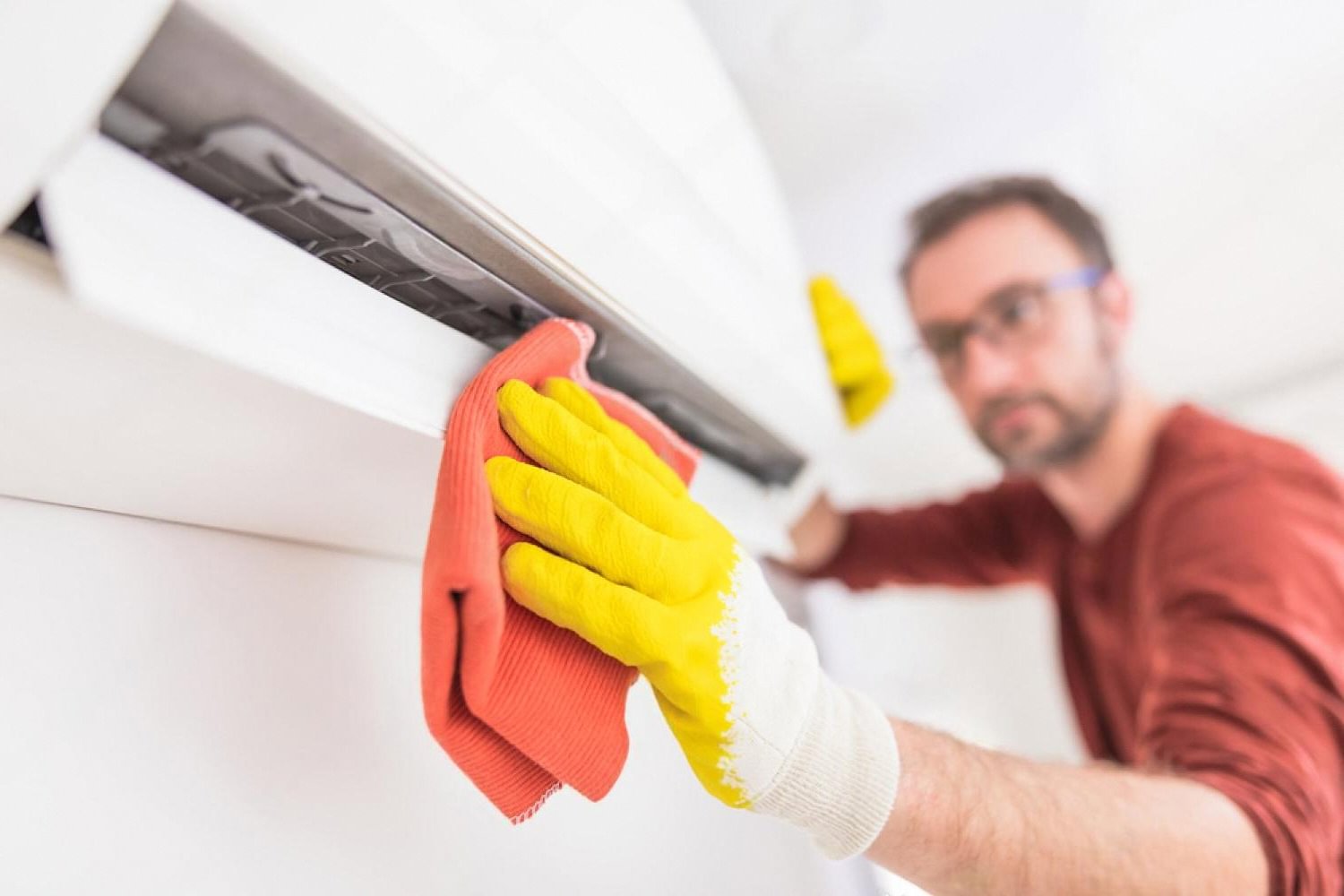
Indoor air, UAE
The mold problem hiding inside every coastal AC
Dubai apartments in Marina, JBR, Deira and Palm Jumeirah run air conditioning almost year-round. Warm, salty air hits a cold coil, water condenses, dust settles, and within a few months a thin biofilm of mold starts to grow inside the very machine you rely on to keep the air clean.
Mold is not a cosmetic issue. The World Health Organization has linked long-term exposure to damp and mold with a measurable rise in asthma, allergic rhinitis and chronic respiratory infections (see the WHO guidelines on indoor air quality and dampness). In coastal Dubai, where windows stay shut for eight months a year and the AC recirculates the same air, that exposure is essentially continuous.
Most residents notice the smell first: a faint musty odor when the compressor kicks in, or a spike in dust allergies that no amount of vacuuming seems to fix. That smell is the byproduct of mold colonies feeding on organic dust trapped on the evaporator coil, drain pan and inside the ducts.
Clean AC versus neglected AC: what really changes
Recently cleaned system
- Neutral smell when the unit switches on
- Cooling reaches set temperature 20-30% faster
- Lower electricity bill, less compressor strain
- Drain line runs clear, no ceiling water stains
- Dust settles more slowly on furniture
Neglected coastal AC
- Musty or sour smell, especially on first start
- Visible black or greenish film on the fins
- Water dripping from the indoor unit
- Higher DEWA readings for the same set point
- Coughing, congestion or eczema flare-ups indoors
How mold actually develops inside a Dubai AC
The physics is simple. The evaporator coil sits at around 7-12 °C while the room stays above 24 °C. Moisture in the incoming air condenses on the coil and drips into a plastic tray. Dust, skin cells, cooking oil aerosols and outdoor sand blow in through the return grille and stick to that wet surface. Within weeks you have a nutrient-rich, dark, moist environment. That is a laboratory-grade recipe for fungal growth.
Three species show up over and over again in UAE indoor air samples:
- Cladosporium. The most common. Olive-green to black patches on the coil and drain pan. Rarely dangerous to healthy adults but a strong asthma trigger.
- Aspergillus. Fuzzy grey or yellow-green. Some strains produce mycotoxins and can cause serious lung infections in people with weakened immunity.
- Penicillium. Blue-green, powdery. Loves damp insulation inside ducts. Classic culprit behind the “old cupboard” smell in villas near the sea.
All three are documented in humid indoor environments by the US Centers for Disease Control and Prevention. In coastal UAE homes they grow faster because salt-laden air keeps surfaces slightly damp even when the AC is off.
What professional cleaning actually removes, and how long it takes
A proper visit is not just wiping the front filter. A qualified ac duct cleaning service will strip the indoor unit down to the coil, chemically treat the fins, flush the drain line, vacuum the ducts with a HEPA-rated machine and finish with an antimicrobial fog. For a standard two-bedroom apartment in Dubai Marina or Business Bay, expect roughly two to four hours of work per unit set.
Is mold removal included in the standard price? Usually yes, but read the quote. Basic filter cleaning is not the same as coil disinfection. Ask specifically whether coil, blower wheel, drain pan and duct sanitisation are all covered.
Results are noticeable the same day. The smell disappears within the first cycle after refit, air throw feels stronger, and the ceiling area around the unit stops sweating. Most households also see a small drop in cooling bills over the next billing period because a clean coil transfers heat more efficiently.
What to do next
Book a full clean once a year
For coastal buildings within 2 km of the sea, twelve months is the outer limit. Villas with pets or heavy cooking should book every 8-9 months.
Change filters every 6-8 weeks
Between visits, this is the single most effective thing you can do. Sand and skin cells are what feed the mold in the first place.
Run the fan for 10 minutes after cooling
This dries the coil before you shut the system off, cutting overnight condensation and slowing mold regrowth dramatically.
Frequently asked questions
Is mold in an AC unit really dangerous, or is it mostly a smell problem?
For healthy adults, low-level exposure usually shows up as a musty odor, congestion or seasonal-style allergies. For children, elderly residents, asthmatics and anyone immunocompromised, it is genuinely dangerous. Species like Aspergillus can cause lung infections, and long-term exposure to any indoor mold raises the risk of chronic respiratory issues.
The smell is a warning sign, not the whole problem.
How often should AC cleaning be done in Dubai?
For apartments within a few kilometres of the coast, once a year is the minimum. Villas, homes with pets, families that cook heavily, and units running 24/7 through summer should aim for every 8 to 9 months.
Filter changes are separate: those should happen every 6-8 weeks regardless of the deep-clean schedule.
Is mold removal included in a standard AC cleaning price?
With reputable providers in the UAE, yes. A proper package covers coil disinfection, drain pan flushing, blower wheel scrubbing and an antimicrobial treatment, all of which handle mold.
Cheaper “filter and quick vacuum” offers do not. If mold is visible or you smell it, insist that coil chemical wash and duct sanitisation are itemised on the quote.
How long does a full AC and duct cleaning take?
For a standard 1-2 bedroom Dubai apartment, budget 2 to 4 hours for the full team. A three-bedroom villa with multiple split units and ducted zones typically takes 5 to 7 hours, sometimes split across two visits if duct access is difficult.
What results should I expect after the cleaning?
Immediately: no more musty smell, stronger and colder airflow, no water dripping from the indoor unit. Within a few weeks: less dust settling on furniture, fewer allergy symptoms indoors, and often a modest drop in DEWA cooling costs because a clean coil is more efficient.
If you still smell mold 24 hours after the service, call the provider back, the drain line or duct interior probably was not fully treated.
Can I clean the AC myself instead of hiring a service?
You can and should handle the filter yourself: pull it out, rinse it under the tap, dry it and put it back every couple of weeks. That alone extends the life of the system.
Coil chemical wash, drain-line flushing and duct vacuuming require dismantling the unit, food-grade biocides and HEPA equipment. Doing that without training risks electrical damage, refrigerant leaks and voided warranties.
Does mold in the AC affect my electricity bill?
Yes, measurably. A coil coated in mold and dust cannot transfer heat efficiently, so the compressor runs longer to reach the same set point. Depending on how neglected the unit is, cleaning it can trim 10-25% off cooling costs, which in a Dubai summer is a meaningful number.

Hello! My name is Jakub Novák, and I am a traveler from the Czech Republic. Since childhood, I dreamed of exploring new countries, and the UAE became one of the most exciting chapters of my journey. Giant skyscrapers, colorful markets, luxurious resorts, and endless deserts – all this makes traveling through the Emirates unforgettable.
In my blog, I share impressions, useful life hacks, the best routes, and tips for those who want to discover the UAE in a new way.