
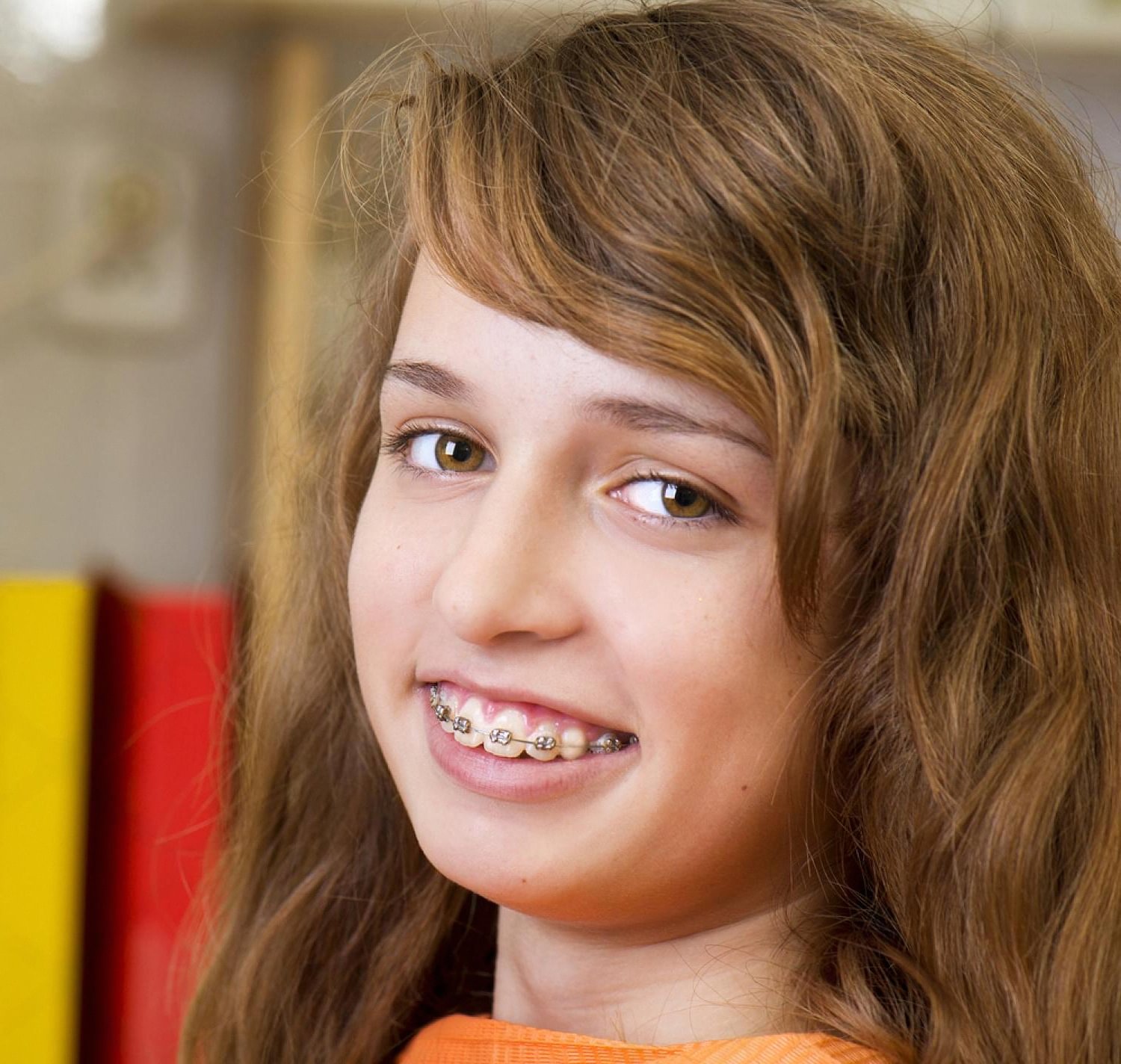
A teenager walks into an orthodontic clinic in Dubai convinced she is there for one reason only: crooked front teeth. Two consultations later, she learns her real problem is the way her upper and lower jaws meet when she bites. The teeth are just the visible part of a bigger story. This mix-up is common. Most people in the UAE still think braces are a cosmetic tool, a way to line up a smile for wedding photos or graduation day. In reality, braces are one of the most reliable tools orthodontists have for correcting how the jaws work together, and that changes everything from chewing to sleep to long-term dental health.
If your bite feels off, if your jaw clicks when you open wide, or if you keep chewing the inside of your cheek, the answer is not always a night guard or a painkiller. Very often, the fix starts with orthodontic treatment. Here is what that actually means, and what to expect.
The basics
What jaw alignment actually means
Jaw alignment describes how your upper jaw (maxilla) and lower jaw (mandible) meet when your mouth is closed. In a healthy bite, the upper teeth sit slightly over the lower teeth, the back molars fit together like puzzle pieces, and the two jaws close without strain. That balanced contact is called occlusion.
When the jaws do not meet correctly, the condition is called malocclusion. According to the National Institute of Dental and Craniofacial Researchmalocclusion is one of the most common dental conditions worldwide. It can show up as an overbite, underbite, crossbite, or open bite. Left untreated, it puts uneven pressure on teeth, strains the jaw joint, and can wear down enamel years faster than normal.
Proper alignment matters because your jaw does a lot of work every day. It chews, it speaks, it supports the muscles of your face. When the fit is off by even a couple of millimetres, the whole system compensates, and something eventually gives.
How braces move more than just teeth
Braces work by applying gentle, continuous pressure to teeth over months. The brackets bonded to each tooth are connected by an archwire, and the wire is tightened or swapped periodically to guide teeth into new positions. As the teeth shift, the bone around them remodels to hold the new position. This process is called bone remodelling, and it is what makes orthodontics possible in the first place.
Here is the part most people miss: as teeth move, the bite changes with them. When an orthodontist corrects the position of the upper and lower arches, the jaws start meeting differently. Elastic bands hooked between the upper and lower braces can pull the mandible forward or back a little, easing an overbite or underbite. In growing children and teenagers, braces can even be combined with expanders or functional appliances to guide jaw growth while the bones are still flexible.
For adults, the jawbones are set, so braces cannot physically reshape the jaw. But they can still correct the bite by repositioning teeth so the arches close cleanly. In severe skeletal cases, orthodontists in the UAE sometimes combine braces with jaw surgery, though that is rare and reserved for structural issues that cannot be solved by tooth movement alone. For milder cases, clear aligner options offered by an experienced invisalign dentist abu dhabi patients trust can also handle mild to moderate bite corrections without traditional metal brackets.
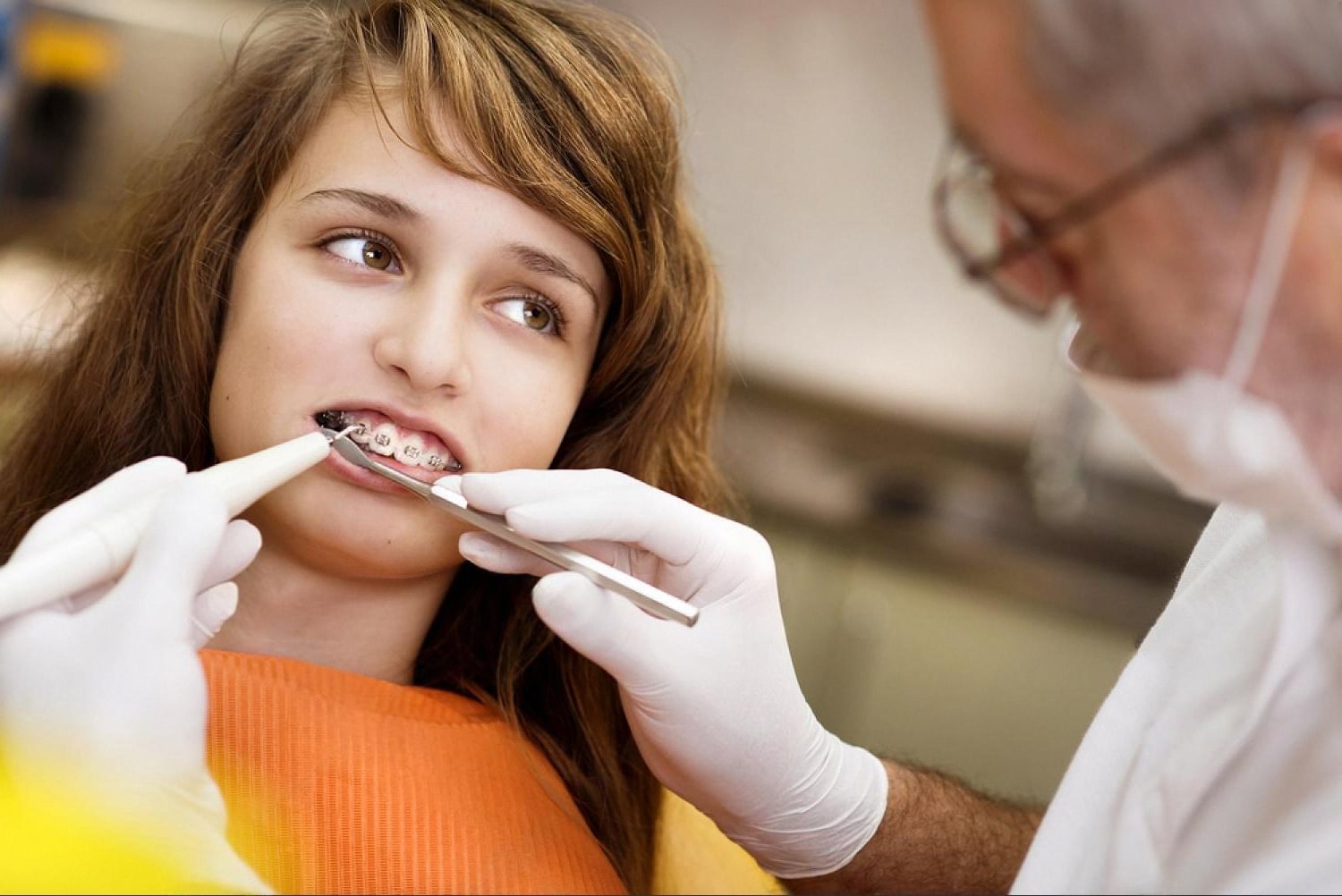
Signs your bite may need attention
Bite problems rarely announce themselves loudly. They creep in as small annoyances that people learn to live with. If any of the signs below sound familiar, it is worth booking a consultation with an orthodontist rather than waiting for the issue to get worse.
- Difficulty chewing. If certain foods feel harder to bite through than they should, or if you find yourself favouring one side of your mouth, the bite may not be distributing force evenly.
- Jaw pain or clicking. A popping sound when you yawn, or a dull ache near the ears at the end of the day, often points to the temporomandibular joint (TMJ) working too hard to compensate.
- Teeth not fitting together properly. Close your mouth naturally. If the upper and lower teeth do not touch cleanly, or if some teeth hit before others, that is a classic bite issue.
- Frequent cheek or tongue biting. Accidentally biting the inside of your cheek once in a while is normal. Doing it several times a week usually means teeth are out of position.
- Uneven tooth wear. Look at your teeth in the mirror. If some are shorter, flatter, or more chipped than others, uneven bite pressure is the likely cause.
- Speech difficulties. Lisping, whistling on certain sounds, or trouble pronouncing s and t sounds can trace back to how the jaws and teeth meet.
Types of braces used to correct bite issues
There is no single best option. The right choice depends on the severity of the bite issue, the patient’s age, lifestyle, and budget. Clinics across Dubai, Abu Dhabi, and Sharjah generally offer four main categories.
Traditional metal braces
Stainless steel brackets and wires. The most affordable and the most effective for complex bite corrections, especially in teenagers.
Ceramic braces
Tooth-coloured brackets that blend in. Same mechanics as metal, but less visible. Popular with adults who want a discreet look.
Lingual braces
Fitted behind the teeth so they are invisible from the front. More technical to place and adjust, but a strong option for patients who cannot have visible hardware.
Clear aligners
Removable trays like Invisalign or Angel Aligners. Excellent for mild to moderate bite problems. Removable for meals and cleaning, though they demand discipline to wear 20 to 22 hours a day.
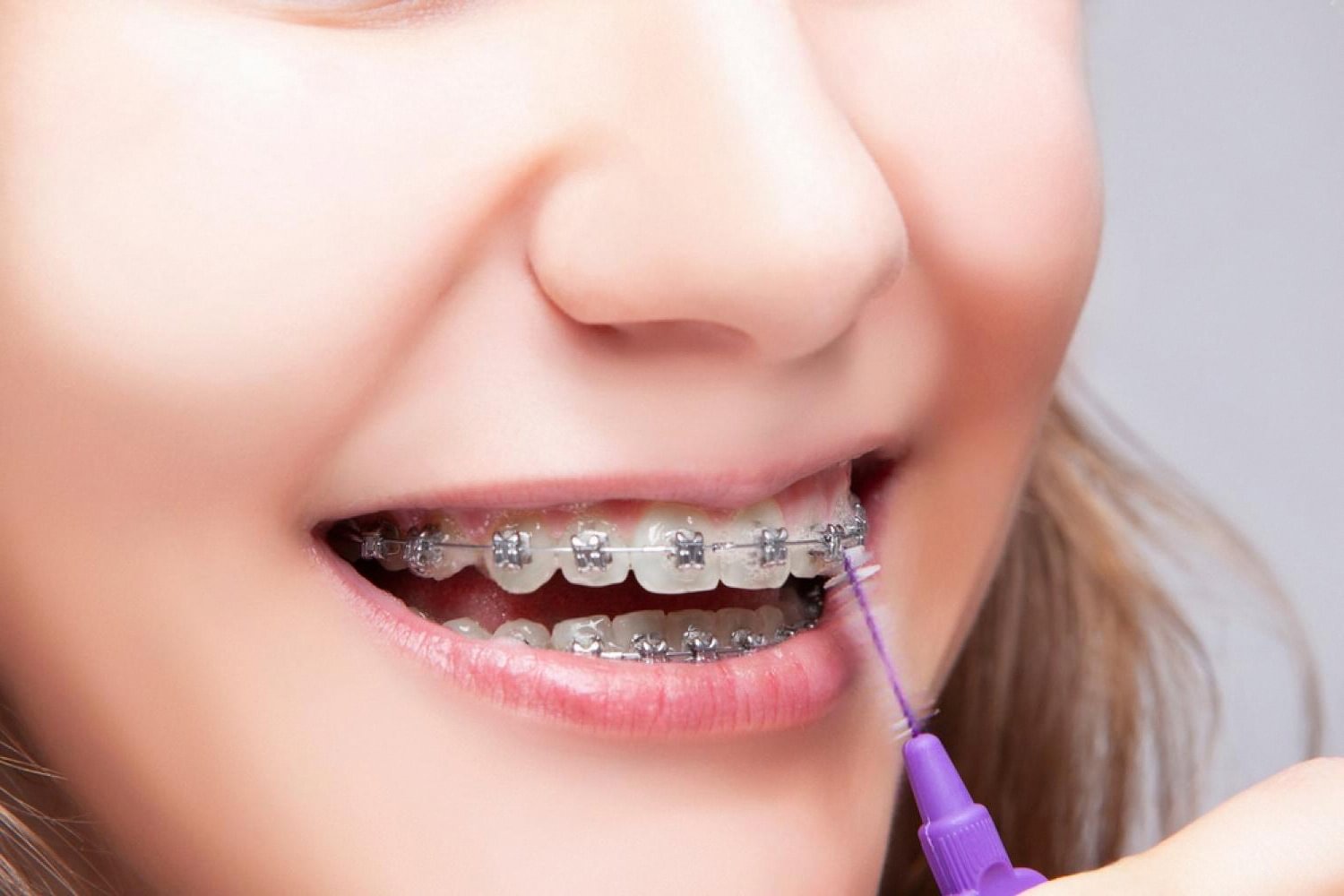
Before and after: what results actually look like
Most patients who complete orthodontic treatment for bite issues notice changes on two levels. The visible one is the smile: teeth line up, gaps close, the front teeth stop crowding each other. The less obvious one is how the mouth feels day to day.
- Chewing becomes easier and more even across both sides of the mouth
- Jaw pain and clicking often reduce or disappear entirely
- Uneven wear on tooth edges stops progressing
- Speech clarity improves, particularly for sibilant sounds
- Cleaning teeth becomes easier because they are no longer overlapping, which lowers cavity and gum disease risk over the long term
A study summarised by the World Health Organization notes that untreated malocclusion contributes to a higher risk of oral disease over a lifetime, which is why bite correction is considered a health investment, not just a cosmetic one.
The short answer
So, can braces fix jaw alignment and bite problems?
Yes. When the diagnosis is right and the treatment plan is followed, braces correct a wide range of bite and alignment issues, from mild crowding to significant overbites and crossbites. The keys are early evaluation, choosing the appliance suited to the case, and staying consistent with appointments and retainers afterwards. If any of the warning signs above sound familiar, a consultation with an orthodontist in the UAE is the sensible next step.
Frequently asked questions
At what age should someone get braces for a bite problem?
The American Association of Orthodontists recommends a first orthodontic evaluation around age 7. That does not mean braces at 7, it means catching jaw growth issues early enough to guide them. Most patients start active treatment between ages 10 and 14, when adult teeth are in but the jaw is still adaptable.
Adults can absolutely get braces too. Tooth movement works at any age, though jaw-based corrections in adults sometimes need clear aligners combined with other interventions.
How long does braces treatment take to fix a bite issue?
Most bite corrections take 18 to 30 months with traditional braces. Simple cases can finish in under a year, while complex skeletal problems may need longer, sometimes paired with elastics or expanders.
Clear aligner cases for mild bite issues often run 9 to 15 months. Your orthodontist will give a more precise estimate after taking X-rays and scans.
Will braces hurt more if I have a jaw alignment problem?
You will feel pressure and mild soreness for a few days after each adjustment, especially in the first month. Patients with bite corrections sometimes feel it more in the jaw joint because elastics are pulling the mandible into a new position.
The discomfort is temporary and manageable with soft foods and over-the-counter pain relief. If pain is sharp or persistent, contact your orthodontist.
Can Invisalign correct bite problems, or do I need traditional braces?
Modern clear aligners handle many mild to moderate bite issues, including overbites, some underbites, and crossbites. Attachments and elastics can be added to aligners to move teeth in specific directions.
Severe skeletal misalignment, complex rotations, or cases needing significant jaw movement usually respond better to fixed braces or a combined approach. An in-person assessment is the only way to know for sure.
What happens after braces are removed?
Retainers. Teeth have memory and will drift back toward their old positions if not held in place. Most orthodontists in the UAE prescribe a fixed wire retainer bonded behind the front teeth, a removable retainer worn at night, or both.
Retainer discipline is the difference between a bite that lasts a lifetime and one that relapses within a few years.
Are braces for bite correction covered by insurance in the UAE?
Coverage varies widely. Some UAE health insurance plans include orthodontic treatment when it is medically necessary, for example to correct a functional bite issue rather than a purely cosmetic one. Others exclude orthodontics entirely.
Check your policy details or ask the clinic to submit a pre-approval with the diagnosis and treatment plan before starting.
Can adults still fix jaw alignment with braces?
Adults can correct tooth position and improve bite function at any age. What braces cannot do in adults is physically reshape the jawbone, because growth is finished.
For adults with significant skeletal problems, the treatment plan sometimes combines braces with orthognathic surgery. For most adult bite issues, though, well-planned orthodontic treatment alone is enough.

Hello! My name is Jakub Novák, and I am a traveler from the Czech Republic. Since childhood, I dreamed of exploring new countries, and the UAE became one of the most exciting chapters of my journey. Giant skyscrapers, colorful markets, luxurious resorts, and endless deserts – all this makes traveling through the Emirates unforgettable.
In my blog, I share impressions, useful life hacks, the best routes, and tips for those who want to discover the UAE in a new way.